A body of knowledge
derived from experience.
Books that bring together the aesthetic, anatomical, and surgical aspects of rhinoplasty; contributions to international works and scientific publications.
A lasting way to
share information.
The works written and co-edited by Barış Çakır reflect a field of study ranging from the analysis of the nasal surface to the preservation of anatomical structures.
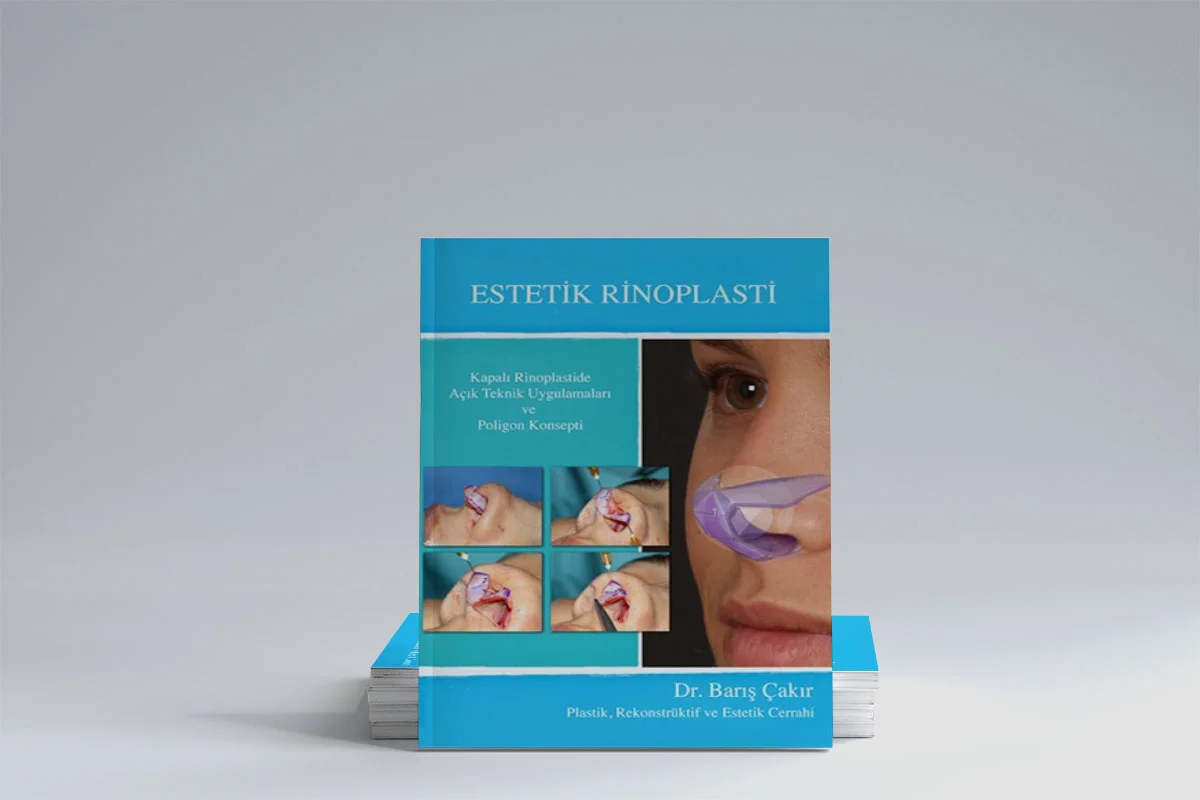
Estetik Rinoplasti
Applications of the Open Technique in Closed Rhinoplasty and the Polygon Concept
In this work, in which Barış Çakır discusses his approach to rhinoplasty in Turkish, he combines open technique applications in closed rhinoplasty with the polygon concept. This approach, which evaluates the shape of the nasal surface and the interplay of light and shadow, establishes a link between aesthetic analysis and surgical planning. The book is a professional reference work supported by illustrations and photographs.
Closed-form approach · Polygon concept · Aesthetic analysis
Aesthetic Septorhinoplasty
From Aesthetic Analysis to Surgical Procedures
Aesthetic Septorhinoplasty focuses on the application of techniques used in open rhinoplasty through a closed approach. Preoperative evaluation, nasal sketching, surface analysis using polygons, surgical procedures, and patient analyses form the core topics of the book. Step-by-step photographs and case studies illustrate Barış Çakır’s approach, which integrates aesthetic evaluation with surgical technique.
Nose Sketching · Surface Analysis · Patient Analyses
First electronic publication: 2015 · Copyright year: 2016. Expanded second edition: 2021/2022.
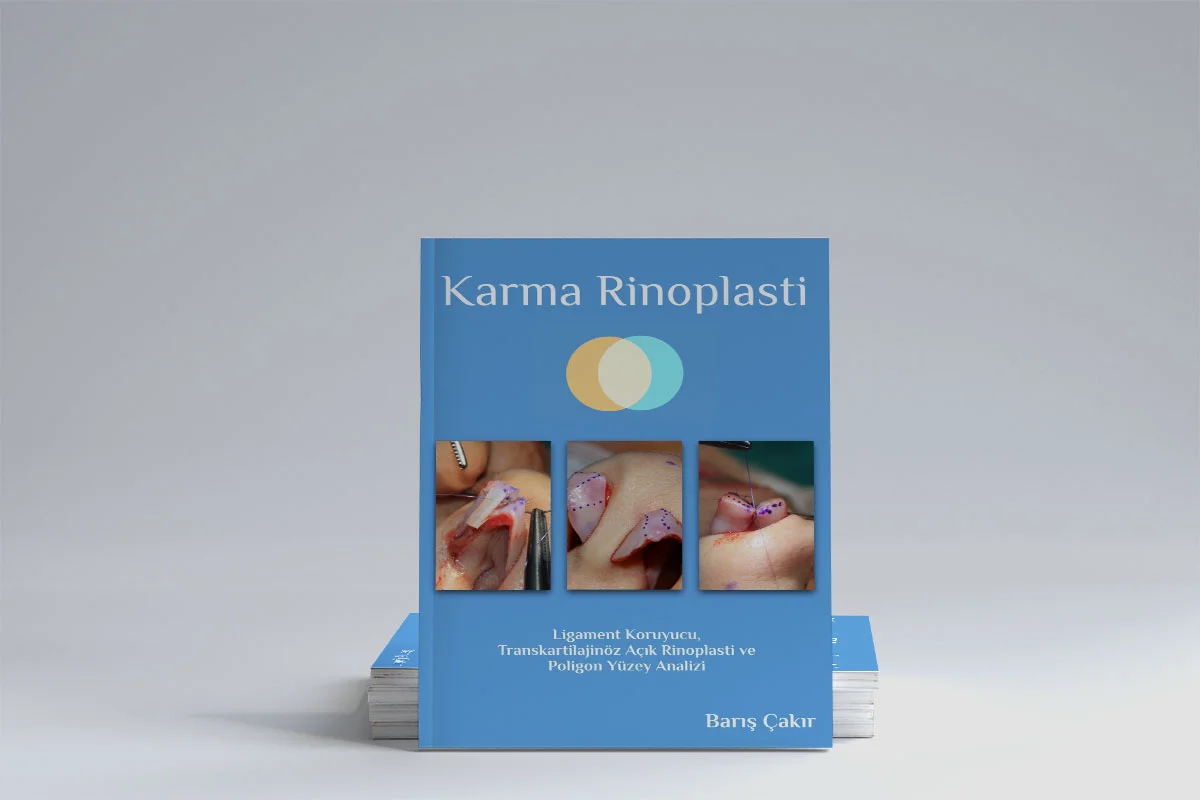
Karma Rinoplasti
Ligament Preserver, Transcartilaginous Open Rhinoplasty, and Polygon Surface Analysis
Combined Rhinoplasty describes an approach that combines the advantages of open and closed rhinoplasty techniques. The book focuses on ligament preservation, transcartilaginous open rhinoplasty, and polygon surface analysis. Barış Çakır shares the techniques he has developed and his surgical experience, conveying to his colleagues the relationship between the assessment of nasal anatomy and the choice of technique.
Hybrid approach · Ligament protection · Polygon surface analysis
Preservation Rhinoplasty
A General Overview of Protective Rhinoplasty
*Preservation Rhinoplasty* is a collaborative work focusing on rhinoplasty approaches that prioritize the preservation of nasal anatomy. The book, for which Barış Çakır served as a co-editor, addresses the preservation of soft tissues, supporting ligaments, cartilages, and the nasal dorsum. It brings together the experiences of various surgeons to explore the anatomical foundations and clinical applications of preservation rhinoplasty.
Soft tissues · Supportive ligaments · Bridge of the nose
Editors: Barış Çakır, Yves Saban, Rollin K. Daniel, and Peter Palhazi.
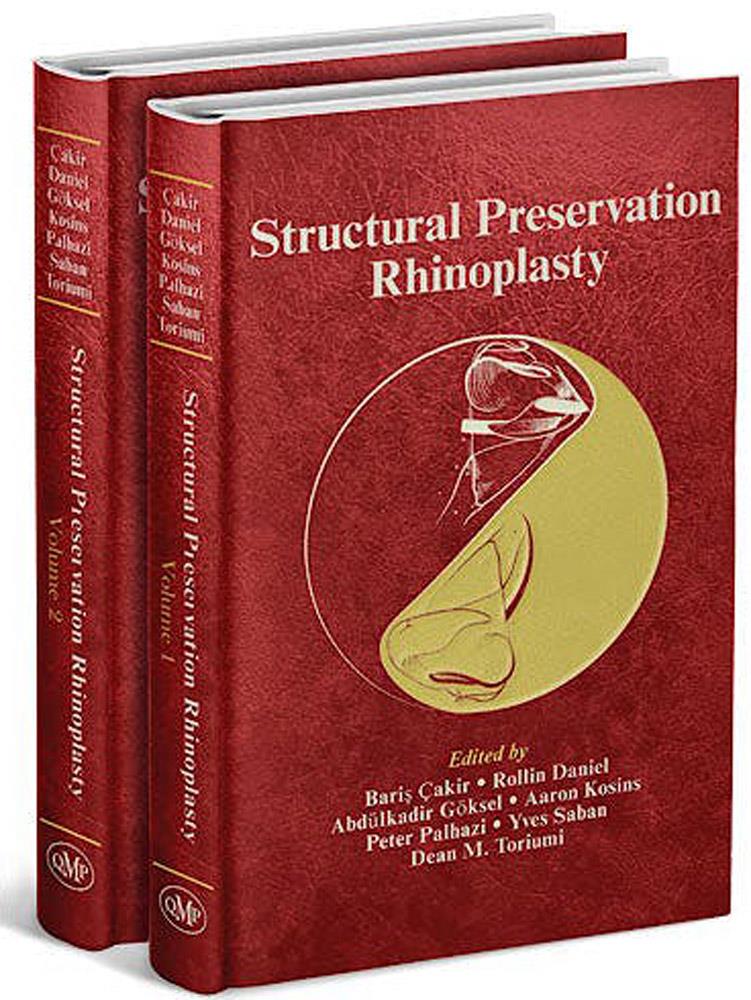
Structural Preservation Rhinoplasty
Structural and preservation approaches combined
Barış Çakır serves as a co-editor of this two-volume work, which combines structural and conservative approaches to rhinoplasty. The book covers the preservation of soft tissue and ligaments, surgery of the nasal tip and dorsum, advanced techniques, and revision procedures. Çakır’s personal surgical approach is also presented through case studies.
Structural approach · Preventive techniques · Revision surgery
Editors: Dean M. Toriumi, Aaron M. Kosins, Yves Saban, Barış Çakır, Rollin Daniel, Abdülkadir Göksel, and Peter Palhazi.
Foreword by
Rollin K. Daniel.
The story behind the publication of the first book—first in Turkish and then in English—is told by Rollin K. Daniel.
Rollin K. Daniel · Newport Beach, California
Read the foreword
“Dr. Baris Cakır has written a worthy successor to Jack Sheen’s monumental text Aesthetic Rhinoplasty. As a resident, I remember reading Sheen’s textbook and suddenly seeing rhinoplasty in a fundamentally new way. Sheen set specific aesthetic goals and achieved them with a range of new techniques that he had developed. For the next 30 years, I learned a great deal in the operating room and from lectures by my colleagues. However, I had not had that feeling of excitement of witnessing a new era in rhinoplasty surgery until I attended the Combined Rhinoplasty Meeting of the Turkish and American Rhinoplasty Societies held in Istanbul in 2011. As usual, I was taking notes and trying to stay awake late in the afternoon during the 5 min presentations. Suddenly, I became aware that something dramatic was happening. A speaker was talking about new concepts for tip aesthetics (polygons), bony vault remodeling (bony sculpting), and nostril sill excision.
When the session was over, I went up to Dr. Cakir and asked him if he would present the talk again for me the next morning. He did and I had him repeat it three times. I was totally amazed at his concepts but wondered if he could really do in the operating room what he was presenting. Therefore, I asked him if he could do a case for me. The conversation went as follows: “I’d like to see you do a case.” “When?” “Tomorrow.” “Okay.” The next day, Dr. Cakir did a rhinoplasty employing a wide range of techniques that he had developed and achieved a superb result.
Later that day at lunch, my head was still reeling from trying to understand the nasal polygons, his advanced tip suture techniques, and repair of numerous ligaments that I had routinely cut. I reasoned that the only way I could understand his concepts was to help Dr. Cakir write up his techniques which he had thus far been unable to publish.
Subsequently, he came to me and said he had more ideas for journal articles. I told him that he would always have too many ideas and too little time. I advised him to go ahead and write a book as it would clarify his thinking and allow others to build on his concepts. Naively, I thought he would be preoccupied for a couple of years. Six months later, he sent me the manuscript, and 3 months after that the Turkish Edition was published to be followed by the English Edition.
In reading Dr. Cakir’s masterpiece, I am struck anew by how original and advanced his concepts truly are. Something as mundane as nasal photography and analysis suddenly becomes an art form and the use of preoperative “shadow photographs” a brilliant breakthrough. Some of his polygon concepts require multiple readings before one fully understands them.
For example, the concept of a “resting angle” between the lower lateral and upper lateral crura is totally new. At first one may think it is of little importance, but when linked to the long lateral crus and herniation of the lateral crus into the vestibule its relevance becomes obvious. One suddenly has an answer for a previously inexplicable problem as well as a method of treatment and more importantly a method of prevention. The discussion of multiple tip points and definition of the soft tissue facets as well as their relation to specific tip sutures is crucial information.
In the surgical technique chapter, the importance of the continuous subperichondrial-subperiosteal dissection plane becomes apparent. The novice surgeon should remember that many of his techniques were perfected through the open approach before Dr. Cakir progressed to the closed approach.
There are certain ideas that I disagree with including scoring of the septum, leaving a 2 mm gap between the septal base and the anterior nasal spine, and resection of the membranous septum. I also recognize that the book may prove daunting to some given the plethora of new concepts and the quality of the English translation. Yet, this is a book to be savored and read multiple times before returning to specific chapters for greater insight into the challenges of rhinoplasty surgery.
For the younger surgeon, the book provides an in-depth discussion of how to analyze and photograph the patient while formulating an individualized patient-specific operative plan. The linkage of surface aesthetics to nasal anatomy to surgical techniques is the foundation of this text.
For the experienced surgeon, the book will be a revelation of how to set and achieve higher aesthetic standards using the described methods.
For the master surgeon, Dr. Cakir challenges many of our accepted principles and techniques ranging from the aesthetic dorsal lines to the need for lateral crural transposition. Every surgeon performing nasal surgery should purchase a copy of Aesthetic Septorhinoplasty as Dr. Cakir’s concepts, principles, and techniques represent the future of rhinoplasty surgery.
Rollin K. Daniel
Newport Beach, CA, USA
Collaborative works,
shared experiences.
Publications in international books that include chapters related to his or her area of expertise.
Clinical Atlas of Preservation Rhinoplasty
Surgical Steps in Dorsal Preservation
Erhan Coşkun ve Barış Çakır · s. 57–84
A section of the atlas for surgeons that addresses the surgical steps of rhinoplasty techniques that preserve the nasal dorsum.
Rhinoplasty: A Case-Based Approach
Preservation Rhinoplasty (Tip Plasty)
Barış Çakır ve Bülent Genç · s. 237–248
A section that evaluates nasal tip surgery and the preservation of anatomical structures in the conservative rhinoplasty approach through case-based explanations.
Contributions to
scientific publications.
The following works are co-authored articles from special issues of journals that have also been published in book and e-book formats.
Rhinoplasty: A Multispecialty Approach
Surface Aesthetics and Analysis
Barış Çakır, Ali Rıza Öreroğlu ve Rollin K. Daniel
It examines the aesthetic analysis of the nasal surface through geometric polygons, lines, and the interplay of light and shadow.
Preservation Rhinoplasty
Key Points in Subperichondrial-Subperiosteal Dissection
Bülent Genç, Ali Murat Akkuş ve Barış Çakır
It focuses on the anatomical and technical aspects of dissection along the cartilage and bone membranes in protective rhinoplasty.
Preservation Rhinoplasty Merges with Structure Rhinoplasty
My Approach to Preservation Rhinoplasty
Barış Çakır, Bülent Genç, Valerio Finocchi ve Sebastian Haack
It describes an approach focused on preserving the supporting ligaments, cartilage structures, and the bridge of the nose.
The date pairs indicate the year the book was published and the year of the journal issue.
Different languages,
new editions.
An expanded second edition of *Aesthetic Septorhinoplasty* is available, as well as a Turkish translation titled *Estetik Septorinoplasti*, translated by Bülent Genç. The third English edition of *Preservation Rhinoplasty* is also listed on the publisher’s online store.